Times and appointment confirmation are handled by Doctoralia.
Weekly menu for fibromyalgia: seven days and a shopping list
With fibromyalgia, the problem is rarely not knowing what is healthy: it is reaching Tuesday without the energy to cook it. This menu is planned the other way around, starting with the difficult day.
This is a week of breakfasts, lunches, and dinners based on Mediterranean-style eating, with dishes that take little effort to prepare, for an adult with fibromyalgia. There is not enough evidence to support any specific diet [1]. Have breakfast if it suits you and fits your day. Plan three to five eating occasions. This menu is a general guide.
Habits that help
Stay as active as you can, without making rest your routine. Aerobic and strength exercise are the only therapies with a strong recommendation [3]. If relevant, weight management also matters more than looking for an anti-inflammatory food.
Prioritise a regular sleep routine over the amount of sleep: keep the same bedtime, make the room dark, and keep screens out of bed.
Do the shopping in one go with the list ready, so deciding what to eat does not become another task.
First, decide what to eat on the day when you cannot manage anything. The rest of the week is organised so that, on that day, there is something already cooked waiting in the fridge. That is why some dishes are repeated: it is not an oversight, it is the plan.
Who is this menu for, and who is it not for?
It is designed for an adult with fibromyalgia who eats a varied diet, cooks for themselves and has no other condition that limits what they can eat. The underlying guidance is in the fibromyalgia food guide.
It has not been calculated for pregnancy, breastfeeding or anyone under 18. It is also not intended for people with diabetes treated with insulin or medicines that can lower blood sugar too much, or for those with chronic kidney disease. It is not suitable for anyone who has or has had an eating disorder. If you have a condition with its own dietary plan (coeliac disease, a diagnosed allergy, heart failure or liver failure), follow that plan.
The seven-day menu
Day
Breakfast
Lunch
Dinner
Monday
Wholemeal bread with tomato and extra virgin olive oil, and a boiled egg
Wholemeal bread with tomato and extra virgin olive oil, and a boiled egg
Chickpea salad with tomato and tuna · One piece of fruit
Potato and carrot mash · Oven-baked salmon or mackerel with onion · Wholemeal bread
Saturday
Wholemeal toast with avocado and fresh cheese, and one piece of fruit
Green salad · Rice with vegetables and prawns · One piece of fruit
Potato, green bean and boiled egg salad · Wholemeal bread
Sunday
Plain yoghurt with rolled oats, fruit and walnuts
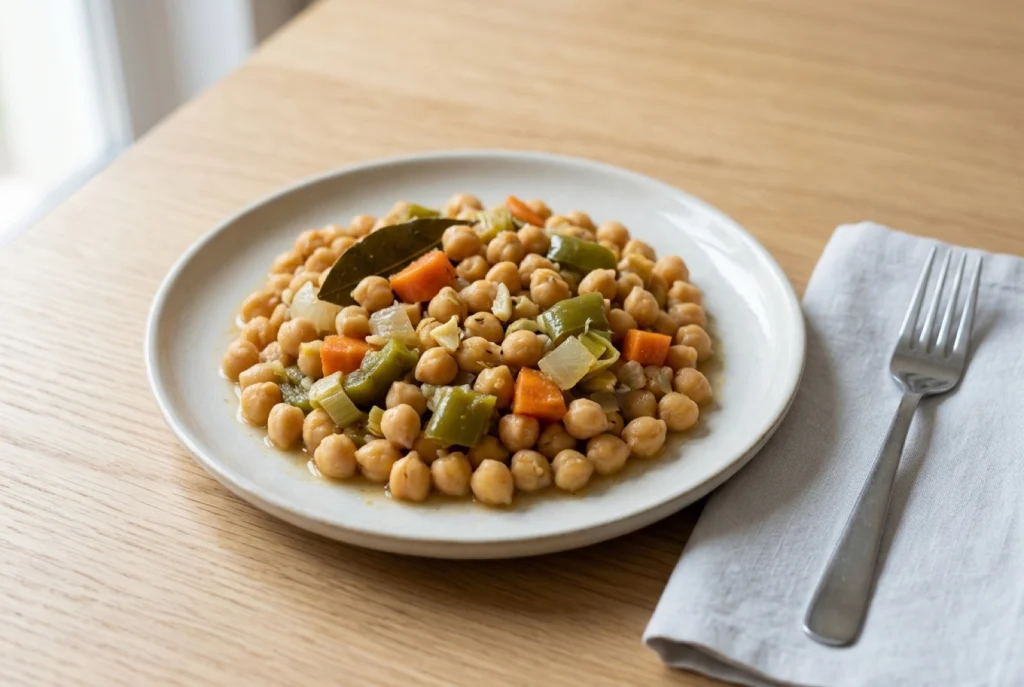
Tomato salad · Chickpeas with spinach · One piece of fruit
Pumpkin soup · Potato and onion omelette · Wholemeal bread
The table deliberately gives no gram amounts or calories, because portion weight is not what determines whether a week is sustainable. There are pulses on four days, vegetables at every meal and at least three servings of fish a week, prioritising oily fish.
You can have one or two additional snacks between the three meals, depending on your day and appetite. Mid-morning, have a piece of fruit with a handful of nuts; in the afternoon, have plain yoghurt or toast with fresh cheese.
This week’s shopping list
The quantities are approximate, for one person for these seven days, and reflect the pack sizes in which products are sold. If there are two of you, double almost everything except cupboard staples, and cross off anything you already have at home. If you choose a soya drink, bear in mind that soya is an allergen.
Fruit and vegetables
14 pieces of seasonal fruit, two a day
3 bananas
1 avocado
1 kg tomatoes
500 g onions
500 g carrots
3 courgettes
500 g pumpkin
1.5 kg potatoes
1 sweet potato
250 g mushrooms
2 peppers
2 bags of mixed salad leaves or lamb’s lettuce
2 lemons and one head of garlic
Fishmonger and butcher
2 hake fillets or another white fish
1 portion of fresh salmon or mackerel
200 g frozen prawns
300 g chicken breast
200 g turkey breast
Eggs and dairy
1 dozen eggs
8 plain yoghurts
1 litre of milk, or a plant-based drink with at least 3% protein (soya is the better option) .
1 tub of fresh cheese
Cupboard staples
2 jars of cooked lentils and 2 of cooked chickpeas
500 g rice and 250 g wholewheat pasta
500 g rolled oats
1 kg wholemeal bread, sliced before freezing
3 cans of tuna in water and 2 of sardines or mackerel
1 jar of crushed tomatoes
1 bottle of extra virgin olive oil
250 g raw or roasted nuts
1 packet of sesame or flax seeds
Freezer
1 packet of green beans
1 packet of spinach
How to get this week ready in an hour
Cook twice and eat four times. Choose a day when you feel at your best and do these three things one after another, with the hob and microwave working at the same time.
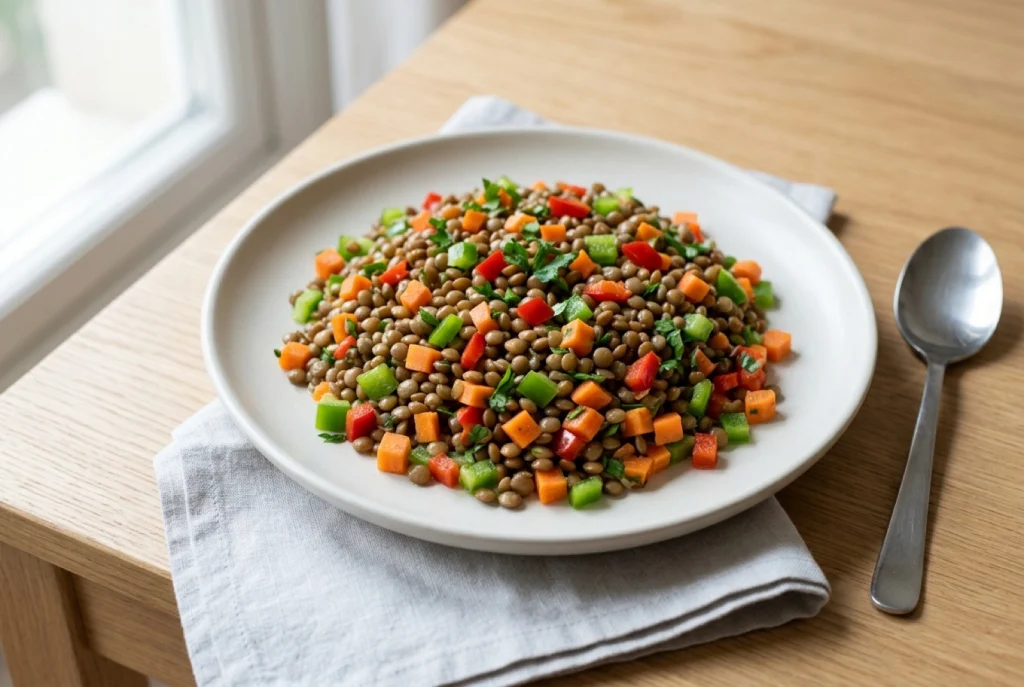
The pot of lentils with vegetables, for Monday and Wednesday lunch.
The courgette and potato soup, for Monday and Wednesday dinner. Freeze any portions left over.
Four boiled eggs, the grated carrot and sliced bread in the freezer, to get breakfasts and salads ready faster.
Once that is done, the remaining days need only a frying pan, the microwave and opening a jar.
What can I change on a day when I can’t manage anything?
On a difficult day, swap the dish without skipping the meal.
That is what makes the difference between a menu you can follow and one you abandon by Wednesday. Getting to the evening without having eaten is what builds up the most fatigue.
You can’t cook. Swap that day’s meal for a jar of pulses, rinsed and sautéed with frozen vegetables and extra virgin olive oil. It takes as long as the pan takes to heat up. Two scrambled eggs with a handful of frozen spinach also work; they take three minutes and use just one pan.
You can’t even face using a pan. Wholemeal bread with tomato, a can of tuna or sardines, and a piece of fruit. It counts as dinner, even if it doesn’t look like it.
You have no appetite. Split the same food into more eating occasions and start with the protein part of the plate, whether that is egg, fish or pulses. What is best not to lose here is muscle. If nothing hot appeals, breakfast yoghurt with rolled oats, fruit and walnuts works for dinner too.
Almost everything upsets your stomach. Use the soups and purées from the week, which are already made, and leave the raw salad for another day. Digestive symptoms are very common in fibromyalgia; specific guidance is in the bloating guide.
If you always find it hard to prepare or eat dinner, the nine quick dinner ideas include more combinations that work just as well here.
Do I need to cut out gluten, dairy or anything else?
No, which is why this menu includes bread, pasta and yoghurt. It is one of the questions we hear most often in consultations. Without a diagnosis that calls for it , evidence that removing gluten, dairy or another whole food group improves pain is very weak or insufficient to support recommending it [2].
What we do know is the cost. Every food group you eliminate makes your diet less varied, more expensive and harder to sustain. If you suspect that something does not agree with you, the next step is to seek a diagnosis, such as coeliac disease, lactose intolerance or irritable bowel syndrome, before cutting anything out.
Once there is a diagnosis, this menu can be adapted without starting over. Swap the bread and pasta for gluten-free versions and the yoghurt for a lactose-free one; the rest of the week stays the same.
Why this menu rather than another one?
Because none has been shown to be better. Two evidence reviews conclude that there is not enough evidence to recommend any specific nutritional intervention for fibromyalgia [1][2]. In that situation, the useful question is which menu you can sustain.
That is where everything else comes from. The foundation is Mediterranean-style, with vegetables, fruit, pulses, fish, eggs, nuts and extra virgin olive oil. It follows the pattern in the anti-inflammatory eating guide, which more people manage to maintain. The dishes take less than twenty minutes to prepare .
This menu was chosen because it supports an overall balanced pattern and can be repeated. No dish in the week treats inflammation on its own, and the menu does not claim to. If it feels manageable, you can repeat it for three months to see how it suits you.
What mistakes do we see in consultations?
Reworking the whole menu on a good day. A menu planned on a day when you have energy assumes you will have that energy all week, and that is not always the case.
Buying supplements to follow it. This menu does not need them, and none has enough supporting evidence for fibromyalgia [1].
Giving up because one dish doesn’t appeal. Simply swap that dish for another from the same column. What matters is having a source of protein at each meal.
A menu will not fix a difficult week, but it takes one decision off your hands, which is no small thing with fibromyalgia. The best one is the one you can repeat next week.
If you would like a plan tailored to your schedule, your kitchen, and your difficult days, our anti-inflammatory nutrition team can prepare one for you, following a nutritional assessment and in coordination with your doctor. We see patients in Barcelona and online.
Changes that help
If fish does not appeal to you
Instead of Monday’s hake or Friday’s salmon, have eggs, tuna, fresh cheese, or pulses, because the protein is what matters in that dinner.
If you do not eat meat
Instead of Tuesday’s chicken and Thursday’s turkey, have pulses, eggs, tofu, or textured soy, because the protein changes while the rest of the week stays the same.
If a savoury breakfast does not appeal to you
Instead of bread with tomato and egg, have plain yoghurt with oats, fruit, and nuts, because you can repeat the breakfast that suits you for all seven days.
If you eat away from home
Instead of reworking the week, choose vegetables or salad as a starter, pulses, fish, or eggs as a main, and fruit, because the meal planned for home can move to the next day.
Your first step this week
Stock your pantry for a difficult day
Before Monday, make sure you have canned pulses, tinned fish, eggs, and frozen vegetables at home. They are a reserve for a day when you have not been able to shop or cook.
When to see a doctor
This menu is a general suggestion for adults with fibromyalgia. It is not an individualised plan and does not replace a nutrition consultation or medical treatment.
If you notice this warning sign while following the menu, do not wait to change your diet:
You feel very low or hopeless, or find yourself thinking about harming yourself [3].
If you are thinking about harming yourself, call 024 or go to an emergency department today.
Lowry E, Marley J, McVeigh JG, et al. Dietary interventions in the management of fibromyalgia: a systematic review and best-evidence synthesis. Nutrients. 2020;12(9):2664. doi:10.3390/nu12092664
Maddox EK, Massoni SC, Hoffart CM, et al. Dietary effects on pain symptoms in patients with fibromyalgia syndrome: systematic review and future directions. Nutrients. 2023;15(3):716. doi:10.3390/nu15030716
Macfarlane GJ, Kronisch C, Dean LE, et al. EULAR revised recommendations for the management of fibromyalgia. Ann Rheum Dis. 2017;76(2):318-328. doi:10.1136/annrheumdis-2016-209724



 All about