Habits that help
- Raise the head of your bed by about 10 cm if you have symptoms at night [1].
- Try sleeping on your left side, the position associated with less acid in the oesophagus in a night-time study [3].
- If you smoke, stopping can also help with reflux [1].
- After eating, wait a while before lying down, bending over or doing intense exercise.
- Wear clothes and belts that do not press on your abdomen.
Heartburn after eating, the feeling that food is coming back up, or a cough that appears when you lie down. With reflux or a hiatal hernia, sitting down to eat stops being a calm moment. Much of the relief comes from how, how much and at what time you eat.
Who is this meal plan for, and who is it not for?
It is designed for an adult with gastroesophageal reflux or a hiatal hernia who has already been assessed by their doctor. It works if you want a well-organised week of meals so you can eat well and notice less discomfort.
It has not been calculated for pregnancy, breastfeeding or anyone under 18. It is also not for people with diabetes treated with insulin or medicines that may lower blood sugar too much, or with chronic kidney disease. It is not for anyone who has or has had an eating disorder. If you have a condition with its own dietary plan (coeliac disease, a diagnosed allergy, heart failure or liver disease), follow that plan. This is not a weight-loss meal plan and it does not include a fixed calorie calculation. Adjust portions using your hand, according to your appetite and activity.
7-day meal plan for reflux and hiatal hernia
| Day | Breakfast | Mid-morning | Lunch | Afternoon snack | Dinner |
|---|---|---|---|---|---|
| Monday | Cereal drink with semi-skimmed milk · toast with fresh cheese | Banana | Brothy rice with courgette and carrot · steamed hake | Plain yoghurt | Courgette soup (courgette béchamel) · one-egg omelette · bread |
| Tuesday | Plain yoghurt with rolled oats and pear | Small piece of toast with avocado | Lentil stew with carrot and potato · baked apple | Ripe fruit | Green beans with potato · grilled turkey breast |
| Wednesday | Milk or plant-based drink · toast with no-added-sugar jam and fresh cheese | Plain yoghurt | Pasta with chicken, courgette and aubergine sautéed in a little oil · fruit | Pear | Vegetable soup with fine noodles · baked sole |
| Thursday | Cereal drink with milk · toast with oil and extra lean cooked ham | Apple | Chickpeas with spinach and boiled egg · fruit | Plain yoghurt | Baked aubergine · salmon cooked in a parcel (small portion) · boiled potato |
| Friday | Plain yoghurt with rolled oats and banana | Small piece of toast with fresh cheese | Warm potato and green bean salad · oven-baked chicken with herbs | Ripe fruit | Carrot and pumpkin soup · steamed cod · bread |
| Saturday | Milk with rolled oats and grated apple | Banana | Rice with rabbit and vegetables · fruit | Small piece of toast with avocado | Oven-baked courgette stuffed with minced turkey · bread |
| Sunday | Cereal drink with milk · toast with oil and fresh cheese | Plain yoghurt | Baked megrim or hake with potatoes · lettuce and carrot salad | Ripe fruit | Chicken and rice soup · courgette omelette |
Each day includes five moderate meals, which you can adapt to four if that suits you better. There are vegetables at lunch and dinner, a gentle carbohydrate and a lean protein. Everything is steamed, baked, grilled, boiled or microwaved, and dinner is the lightest meal.
Fruit with meals should be ripe seasonal fruit, whole or baked. If you arrive at dinner very hungry on a particular day, serve more cooked vegetables before increasing the protein or bread.
How much should I put on each plate?
Measure your portion using your hand. The meal plan does not give amounts in grams because portions depend on your build, appetite and activity.
- Protein (fish, chicken, turkey, egg): about the size and thickness of your palm.
- Carbohydrates (potato, rice, pasta, bread): what fits in your closed fist
- Vegetables: what fits in both your open hands; you can have more
- Oil: about the size of your thumb, roughly one tablespoon per plate.
At dinner, choose the smaller portions shown. One palm of protein, half a fist or one fist of carbohydrates, and as many vegetables as you like. Bread, rice and pasta can be wholegrain if they suit you.
Your weekly shopping list
Amounts are for one person for seven days. If you are cooking for more people, multiply the fresh ingredients. If you choose a plant-based drink, make sure it contains at least 3% protein; soy is a better choice, but remember that soy is an allergen.
Fruit and vegetables
- 6 courgettes, 1 kg carrots and 1 piece of pumpkin
- 3 aubergines and 500 g green beans
- 1 bag fresh spinach and 1 lettuce
- 2 kg potatoes and 2 onions
- 5 bananas, 5 apples and 5 pears
- 1 kg ripe seasonal fruit (melon, papaya, loquats or grapes)
- 1 avocado
Fishmonger
- 2 hake fillets
- 1 cleaned sole or megrim
- 1 small salmon fillet
- 1 fresh or desalted cod fillet
Butcher
- 2 chicken breasts and 1 turkey breast, sliced
- 200 g minced turkey
- Half a rabbit, cut into pieces
- 1 chicken carcass for stock
- 100 g extra lean cooked ham
Dairy and eggs
- 1.5 litres semi-skimmed milk or unsweetened plant-based drink with at least 3% protein.
- 8 plain yoghurts
- 2 tubs fresh cheese
- 6 eggs
Pantry
- 500 g rice and 250 g pasta
- 100 g fine noodles
- 250 g dried lentils or 1 jar cooked lentils
- 1 jar cooked chickpeas
- 300 g rolled oats
- 1 loaf or sliced loaf of bread (freeze it in slices)
- 1 jar no-added-sugar jam
- Caffeine-free cereal drink
- Extra-virgin olive oil, salt, nutmeg and aromatic herbs (parsley, oregano, thyme)
How to organise the week when time is short
- Cook several portions at once. On Sunday, prepare some boiled potatoes and Tuesday’s lentils. They keep in the fridge for three or four days.
- Lunch to take with you. Vegetable rice or warm potato salad travels easily and can be eaten warm.
- When ordering a set lunch. For a starter, choose vegetable soup, boiled vegetables or rice. For the main, choose grilled fish or chicken, with the sauce on the side and no coating.
- When there is no time to cook. Put a thinly sliced potato with a splash of water in a covered container and microwave it for five minutes. Add a hake fillet with parsley and a few drops of oil, then cook for another three or four minutes.
- If work means you eat dinner late. Have a more substantial afternoon snack and keep dinner very light, such as soup with an egg.
Why is this meal plan designed this way?
It focuses on three factors that often affect reflux: how much you eat, how much fat is in the meal, and when you have dinner. A large, fatty meal fills the stomach more and takes longer to empty. This can make stomach contents more likely to rise into the oesophagus.
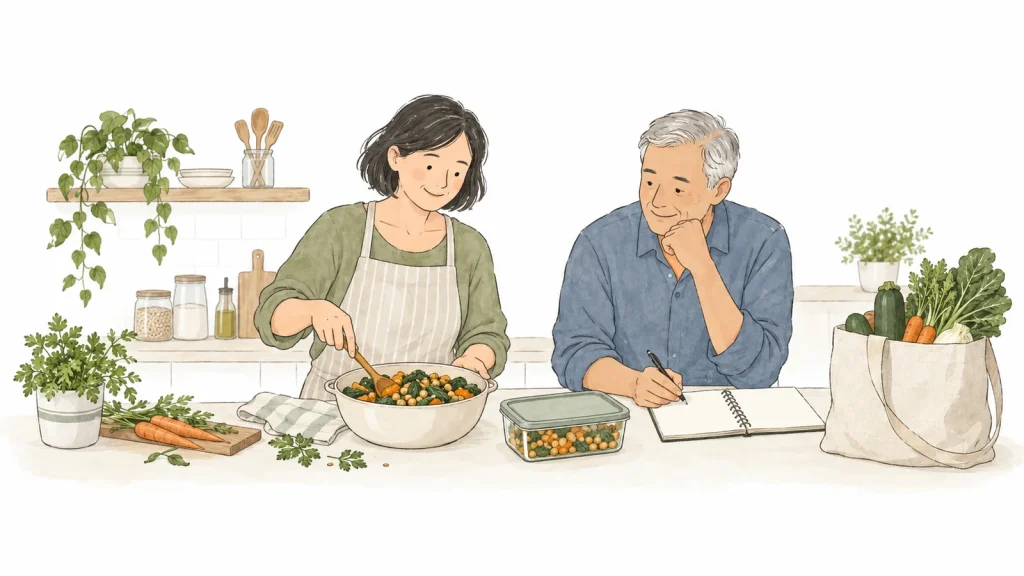
That is why the week spreads food across five meals and leaves out fried and battered foods, fatty cured meats, pastries, and sauces made with cream or butter. It also excludes spicy foods, fizzy drinks and alcohol.
Dinner timing is the other key point. The US reflux guideline recommends eating at least two to three hours before going to bed [1]. If you have a hiatal hernia or night-time symptoms, another expert review advises eating three hours before bed [2].
And weight. Weight loss is recommended for people with reflux who are overweight or have obesity [1]. This meal plan has not been calculated for that purpose; if this applies to you, an individual plan would be appropriate.
The full guidance, including what reflux is, how to assess foods one by one and when to see a doctor, is in the diet for gastroesophageal reflux. If you have a hiatal hernia, see the diet for hiatal hernia, and if you also have gastritis, the diet for gastritis.
Do I need to cut out tomatoes, citrus fruit or tea?
Not to begin with. The recommendation is to avoid foods that trigger symptoms for you, rather than following one fixed list for everyone [1]. Tomato, orange, vinegar, strong tea or chocolate may bother some people, while others tolerate them without any problem. The same goes for mint and spearmint. Coffee is avoided with reflux and hiatal hernia.
For other foods, pay attention to your own tolerance.
Cutting everything out just in case can make your diet less varied and harder to maintain. It is one of the questions we hear most often in consultations. A practical approach is to try a little tomato in a lunchtime salad or an orange mid-morning, and see how you feel.
If a food gives you heartburn, remove it for one or two weeks. Then reintroduce it on its own and see how you tolerate it. That is why this week leaves out coffee, raw tomato and citrus fruit. You can try the latter later, depending on your tolerance.
What common mistakes do we see in consultations?
Cutting out many foods at once. Tomato, citrus fruit and chocolate all disappear at the same time, leaving a limited and boring week. Afterwards, no one knows which one was causing discomfort.
Focusing on the plate and forgetting the time. You eat well during the day, then have dinner late or snack on the sofa before bed. Dinner timing is the first thing we review.
Eating too quickly. Ten minutes in front of a screen, and the plate is empty before you realise you are full. Eat slowly and chew well; a moderate portion will be enough.
With reflux and a hiatal hernia, sticking to simple habits often helps: moderate portions, cooking without frying and having dinner early. Do not restrict your diet more than necessary.
If your symptoms continue, you have been taking reflux medication for a long time, or you are unsure which foods affect you, an individual assessment can help. At our digestive dietitian clinic, we prepare a plan tailored to you, in Barcelona and online.
Changes that help
If you prefer a different breakfast drink
Instead of the cereal drink on Monday, Thursday and Sunday, have milk or an unsweetened plant-based drink. This keeps breakfast coffee-free.
If salmon does not agree with you
Instead of Thursday’s salmon parcel, choose hake, sole or cod, as they contain less fat and are easier to digest in the evening.
If whole pulses make you feel bloated
Instead of Tuesday’s lentils and Thursday’s whole chickpeas, have them puréed, as the skins are the part most likely to cause gas.
If a recipe calls for cream
Instead of cream or classic béchamel, use courgette béchamel or whipped fresh cheese for a creamy texture with much less fat.
We explain it on video
Your first step this week
Prepare the courgette béchamel in advance
Sauté one chopped onion in a tablespoon of olive oil and add two peeled, chopped courgettes. Cook for five minutes, add 250 ml milk or plant-based drink, salt, pepper and nutmeg, simmer gently for 20 minutes and blend. It is Monday’s dinner and the mild sauce for the week.
Your week of gentle meals for your stomach
- 7-day menu with gentle, spread-out meals
- 8 recipes and the shopping list
- What tends to cause trouble and when to see a doctor
Where should we send it?
Free PDF, in your inbox in a moment.
Data controller: Alimmenta Tu Vida, S.L. Purpose: to send you the guide and, only if you tick the second box, tips by email on the topic. You can withdraw your consent and exercise your rights at [email protected]. Legal basis, recipients and retention periods are in our privacy policy.
When to see a doctor
This meal plan is general guidance for adults with reflux or a hiatal hernia. It is not an individual plan and does not replace a consultation or treatment prescribed by your doctor. Do not stop your treatment on your own. Food choices may ease symptoms; your doctor diagnoses and treats the underlying cause.
If you notice this warning sign while following the meal plan, do not wait to change your diet:
- You vomit blood, or your vomit is dark like coffee grounds.
If this happens, go to emergency care today.
The full list of warning signs that call for a medical appointment is in the diet for gastroesophageal reflux.

Bring your medical reports and we will review them with you at your first appointment
With your diagnosis and test results in front of us, we go through what you eat on a typical day. You leave with initial recommendations and a symptom diary to keep that week. At your second appointment, you receive your eating plan.
Keep reading

Diet for gastro-oesophageal reflux: what to eat and what to change
Your chest burns after eating, you have a dry cough and you sleep badly. In many cases, the…
Hiatus hernia diet: what to eat and how to have dinner
If every dinner ends in heartburn and broken nights, you are not doing it wrong. With a hiatus…

Diarrhoea: what to eat, what to avoid and when to see a doctor
You have had loose stools for several days and wonder whether you should eat only rice or stop…
 Consultation
Digestive dietitian in Barcelona and online
Improving your symptoms starts with understanding your digestion
Book a visit →



Sources
- Katz PO, Dunbar KB, Schnoll-Sussman FH, et al. ACG Clinical Guideline for the Diagnosis and Management of Gastroesophageal Reflux Disease. Am J Gastroenterol. 2022;117(1):27-56. doi:10.14309/ajg.0000000000001538
- Yadlapati R, Gyawali CP, Pandolfino JE, et al. AGA Clinical Practice Update on the Personalized Approach to the Evaluation and Management of GERD: Expert Review. Clin Gastroenterol Hepatol. 2022;20(5):984-994.e1. doi:10.1016/j.cgh.2022.01.025
- Schuitenmaker JM, van Dijk M, Oude Nijhuis RAB, et al. Associations Between Sleep Position and Nocturnal Gastroesophageal Reflux: A Study Using Concurrent Monitoring of Sleep Position and Esophageal pH and Impedance. Am J Gastroenterol. 2022;117(2):346-351. doi:10.14309/ajg.0000000000001588
Written and reviewed by


How we can help
Now, applied to you
Digestive dietitian in Barcelona and onlineImproving your symptoms starts with understanding your digestion
4.9 on Google · 5.0 on Doctoralia · 2,047 reviews