You can eat
- Vegetables of all kinds: artichoke, asparagus, leek, onion, garlic, carrot and leafy greens, a base of fermentable fibre.
- Seasonal fruit: apple, pear, banana, red berries, plums and kiwi, with the skin well washed when it is edible.
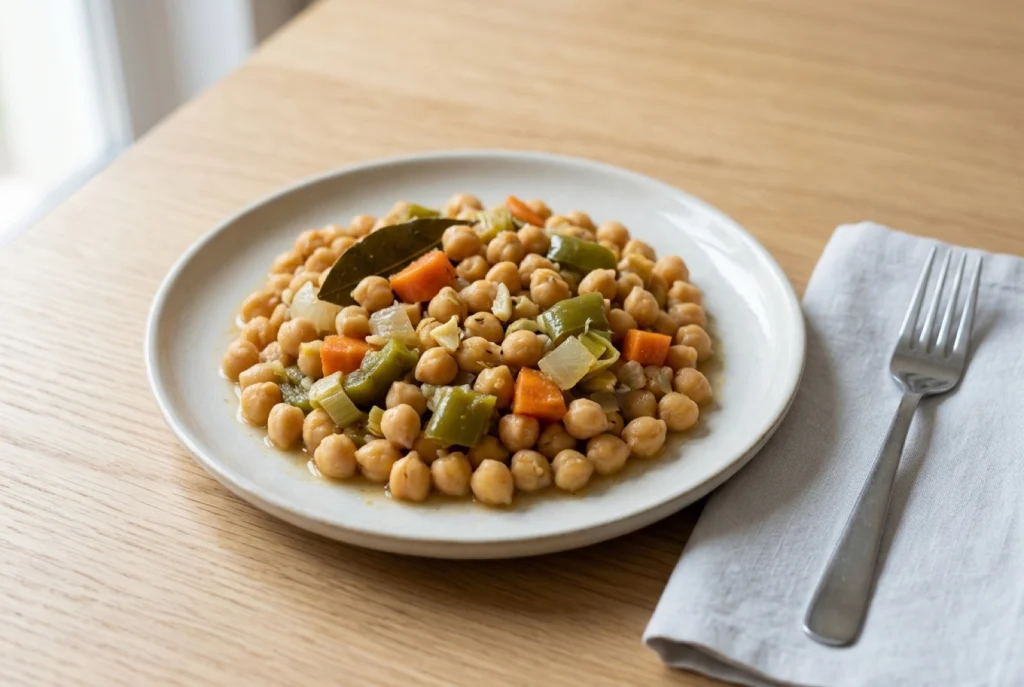
- Pulses: lentils, chickpeas, beans and peas, introduced gradually if you notice gas.
- Wholegrains and tubers: oats, brown rice, quinoa, buckwheat, potato and sweet potato, cooked and cooled (resistant starch).
- Fermented foods: plain yoghurt, kefir, unpasteurised sauerkraut, kimchi, tempeh and miso.
- Nuts and seeds: walnuts, almonds, chia seeds, flaxseed and ground sesame, which add fibre and plant variety.
- Quality fats: extra virgin olive oil and oily fish (sardine, mackerel, salmon), as part of a Mediterranean diet.
- Herbs and spices: oregano, rosemary, thyme and turmeric, which also count as different plants in your week.
What to avoid
- Ultra-processed foods and industrial pastries: if they take the place of fruit, vegetables or pulses, you reduce your plant variety.
- Sugary drinks and soft drinks: keep them for occasional use and choose water for everyday drinking.
- Alcohol: it has no proven benefit for looking after your microbiota.
- Excess sweeteners: their effect on the microbiota in people is still being studied.
- Fatty cold cuts and heavily processed meats: better kept occasional, leaving room for plant foods.
- Probiotic supplements without a specific medical indication: they are not recommended by default. If there is an indication, your doctor or your registered dietitian-nutritionist will set it.
- Commercial stool microbiota tests: on their own, they are not enough to plan a diet.
Changes that help
Low fiber breakfast
Cookies or pastries → whole oat flakes with kefir or natural yogurt and crushed chia seeds
Carbohydrate garnish
Freshly cooked white rice → potato cooked and cooled in the refrigerator to provide resistant starch
The mid-afternoon snack
Ultra-processed snack or sugary bar → a handful of nuts and a piece of seasonal fruit with skin
Dressings and sauces
Industrial sauces with emulsifiers → extra virgin olive oil with aromatic herbs (oregano, thyme)
The usual dessert
Sugary dairy dessert → natural yogurt with red fruits rich in polyphenols
Habits that help
- Move every day: regular physical exercise helps your bowel rhythm.
- Look after your sleep: poor sleep over a long period also shows in your digestion.
- Manage ongoing stress: the gut-brain axis means stress can affect your bowel rhythm.
- Do not self-medicate with antibiotics: take them only when prescribed by a doctor and as directed.
- Chew slowly and eat calmly: it helps digestion and helps you notice when you are full.
Bacteria, viruses, fungi and archaea live in the gut. Together they form the gut microbiota. Many of them ferment the fibre your body does not digest and produce substances that the cells of the colon use. They also interact with the immune system.
Gas, bloating or changes in bowel movements can have many causes. On their own, these symptoms cannot tell you what your microbiota is like. In consultations, we start from what you eat, what you tolerate and medical assessment when needed.
What is the gut microbiota and why does its diversity matter?
The gut microbiota is the community of microorganisms that lives in the digestive tract, mostly in the colon. Many different species live together there. Diversity describes how many types live together. On its own, it cannot tell you how healthy you are.
The American Gut project observed that people who ate more than 30 different plants a week had a more diverse microbiota than those who ate fewer than 10 [2]. This is an association, not proof that reaching 30 will change your health. You can start by adding variety to what already agrees with you.
If what bothers you is mostly your stomach, with heartburn or heaviness after eating, start with the gastritis diet, the general guide from our digestive team.
Which foods provide fibre for the microbiota?
Many bacteria in the colon make use of the fibre we do not absorb. Some fibres act as prebiotics. The consensus of the scientific association ISAPP reserves that term for substrates that are used selectively by microorganisms and linked to a health benefit [3].
The European authority EFSA considers 25 g of fibre a day adequate for normal bowel transit in adults [1]. This is a general reference, not a dose prescribed to change the microbiota. If you usually eat little fibre, increase it gradually and watch how you tolerate it.
- Vegetables and fruit. Combine different seasonal options, such as leek, artichoke, apple and pear.
- Pulses and wholegrains. Try lentils, chickpeas, oats or wholemeal rye bread.
- Resistant starch. Potato or rice that has been cooked and cooled provides starch that can be fermented in the colon.
How fermented foods fit in
Fermented foods are made through the controlled growth of microorganisms. This is how the ISAPP consensus defines them [4]. Plain yoghurt, kefir or some fermented vegetables can add variety to your meals.
Not all of them still contain live microorganisms when you eat them. Sourdough bread, for example, is baked. Nor is every fermented food a probiotic. That name requires a demonstrated benefit for specific microorganisms [4]. If you like them and they agree with you, you can include them without setting yourself a required frequency.
Are probiotic supplements necessary?
This is a common question in consultation. The World Gastroenterology Organisation guideline explains that possible effects depend on the strain and on the situation studied [5]. For that reason, we do not recommend choosing a product only for the number of bacteria it advertises.
If you eat a varied diet and have no symptoms, you do not need to take them as a matter of routine. There is also not enough evidence to recommend probiotics for bloating. If you have a diagnosed digestive problem, such as irritable bowel syndrome, talk to your doctor or registered dietitian-nutritionist. We do not recommend strains by default. If there is a specific medical indication, your doctor or your registered dietitian-nutritionist will set it.
What does dysbiosis mean, and can a commercial test detect it?
Dysbiosis is a term for changes in the microbial community. On its own, it is not the same as a disease, and it does not explain every case of bloating. There is still no single “normal” microbiota pattern against which to compare everyone [6].

The international consensus on microbiota analysis does not support using a “dysbiosis index” to diagnose or to prescribe a diet [6]. A commercial stool test also does not capture the whole gut. If you have persistent symptoms, your doctor will decide which tests make sense. Avoid cutting out foods because of a laboratory score.
Your eating adapts to your symptoms and your life, not to a test score.
When ultra-processed foods crowd out plant variety
When ultra-processed foods take up much of the plate, there tends to be less room for pulses, fruit and vegetables. Those foods provide the microbiota with different kinds of fibre. Smoking is not a strategy for looking after it either. There is no safe amount of alcohol for health (WHO): the less, the better; and none during pregnancy, breastfeeding, childhood, if you are going to drive or if your medication does not allow it.
The gut-brain axis describes two-way communication. A review of studies in people found associations between the microbiota and depression, without showing that changing it treats that condition [7]. If low mood persists or affects your daily life, ask for a medical or psychological assessment.
How long does the microbiota take to respond to dietary changes?
In intensive dietary interventions, changes in microbial composition have been observed within 24 to 48 hours [8]. The review that brings those studies together also indicates that many changes are temporary. We still do not know how long a diet pattern must be kept up to produce a lasting change [8].
That is why we suggest adjustments you can sustain. Adding one pulse you tolerate and one new vegetable to the weekly shop is worth more than a week of difficult rules.
What do we know about so-called “leaky gut”?
Intestinal permeability is a property of the gut barrier. It can be altered in some diseases, but having gas or bloating does not show that the barrier is damaged. “Leaky gut” is not, on its own, an accepted medical diagnosis [9].
A clinical review warns that commercial tests and plans to “repair” it have no established usefulness for those symptoms [9]. If the discomfort continues, ask for a medical assessment before paying for tests or cutting out food groups.
What mistakes do we see in consultation?
- Raising fibre all at once can cause temporary gas. Go step by step and drink enough water.
- Staying on a low-FODMAP diet without setting an end date from the first day. The exclusion phase lasts 2 to 6 weeks and is followed by a guided reintroduction.
- Cutting out foods because of a stool test. First we review your symptoms and the relevant medical tests.
- Trying for one perfect week and giving up afterwards. The aim is to find changes that fit your routine.
Looking after your gut microbiota does not require expensive supplements or unsupported stool tests. It is built on the plate, with plant variety, pulses, fruit and fermented foods, and with rest and movement.
If you often have gas, a bloated belly or discomfort that does not go away, and you do not know how to increase fibre without it disagreeing with you, we can help. In our digestive nutrition consultation, we plan a progression adapted to your tolerance, in Barcelona and online.
Every gut has its own rhythm, and the plan adapts to yours.
We explain it on video
More videos
Three simple ways to feed your microbiota today
Natural yogurt with red fruits, walnuts and chia seeds
Breakfast or snack that combines live lactic bacteria, polyphenols and soluble fiber
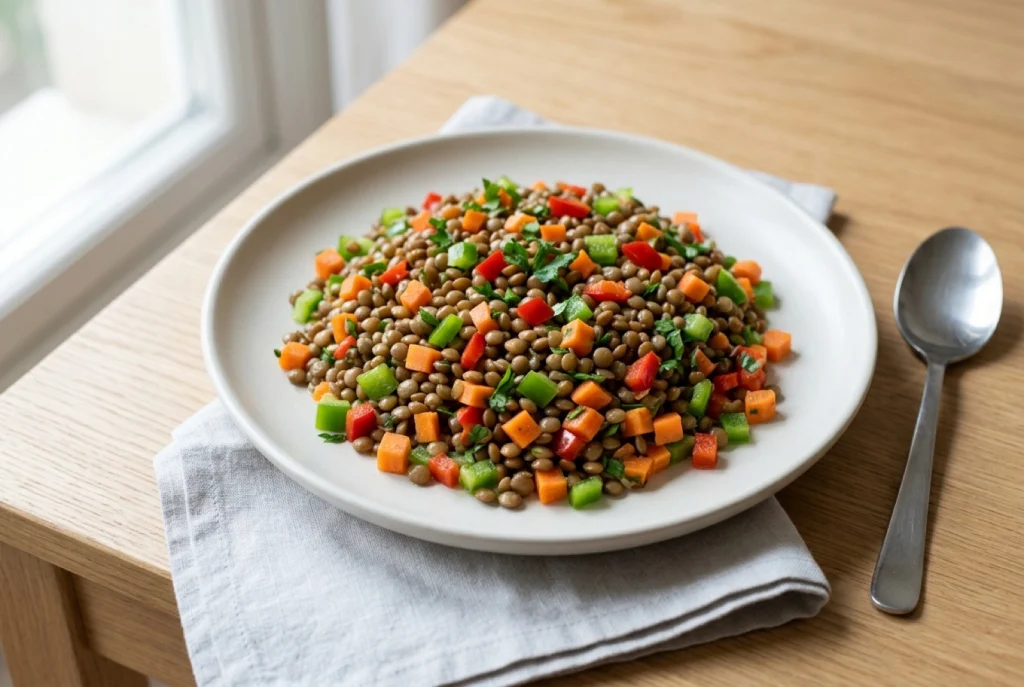
Warm lentil salad with various vegetables and olive vinaigrette
Complete meal that includes legumes, seasonal vegetables and healthy fats
Cooked and cooled potato or sweet potato with steamed fish and vegetables
Resistant starch-rich digestive dinner to feed butyrate producers
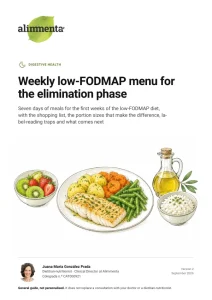
Your menu for the FODMAP elimination phase
- 7-day menu with the shopping list
- 8 low-FODMAP recipes
- The portions that make the difference and label traps
Where should we send it?
Free PDF, in your inbox in a moment.
Data controller: Alimmenta Tu Vida, S.L. Purpose: to send you the guide and, only if you tick the second box, tips by email on the topic. You can withdraw your consent and exercise your rights at [email protected]. Legal basis, recipients and retention periods are in our privacy policy.
When to see a doctor
When to see a doctor
Nutrition can help you eat a wider variety of foods and manage some discomfort. Diagnosing a digestive disease is a matter for a doctor. If any of these signs appear, ask for medical assessment before changing your diet.
Book a medical appointment without waiting to change your diet if you notice any of these signs:
- You see blood in your stool or bleed from your anus [10].
- You lose weight without meaning to [10].
- You have a close relative with colon or ovarian cancer [10].
If you see blood or lose weight without trying, book an appointment with your GP this week. Also mention your family history so they can assess whether you need further tests. After that, a registered dietitian-nutritionist can adapt your eating to your diagnosis.
Most digestive symptoms do not reach this point. Knowing when to seek advice is part of looking after yourself.

Tell us what is happening and which tests you have had
At the first visit we go over your symptoms, your meals and what you have already tried. Within a week you have your plan. Bring any reports and blood tests you have, even if they came back normal.
Keep reading

FODMAP diet: what to eat, what to avoid and how long it lasts
You have been told to follow a low-FODMAP diet and all you find are lists of hundreds of…
Irritable bowel syndrome diet: what to eat and what you need not cut out
You arrive with a list of removed foods that keeps growing, and your gut stays the same. It…

Irritable bowel symptoms: what to eat
Your stomach hurts, your bowel habits have changed, and you want to know what to eat without making…
- Consultation
Digestive dietitian in Barcelona and online
Improving your symptoms starts with understanding your digestion
Book a visit → - All about
Crohn’s, colitis and other digestive diseases
Find a guide for your situation and ask your medical team which changes to your diet are right…
- Consultation
Dietitian for digestive symptoms without a clear diagnosis in Barcelona and online
Bloating, gas, diarrhoea or heartburn that are still there after many tests, with help to make sense of…
Book a visit →




Recipes for this goal
Sources
- EFSA Panel on Dietetic Products, Nutrition and Allergies (NDA). Scientific Opinion on Dietary Reference Values for carbohydrates and dietary fiber. EFSAJournal. 2010;8(3):1462. doi:10.2903/j.efsa.2010.1462
- McDonald D, Hyde E, Debelius JW, et al. American Gut: an Open Platform for Citizen Science Microbiome Research. mSystems. 2018;3(3):e00031-18. doi:10.1128/mSystems.00031-18
- Gibson GR, Hutkins R, Sanders ME, et al. Expert consensus document: The International Scientific Association for Probiotics and Prebiotics (ISAPP) consensus statement on the definition and scope of prebiotics. Nat Rev Gastroenterol Hepatol. 2017;14(8):491-502. doi:10.1038/nrgastro.2017.75
- Marco ML, Sanders ME, Gänzle M, et al. The International Scientific Association for Probiotics and Prebiotics (ISAPP) consensus statement on fermented foods. Nat Rev Gastroenterol Hepatol. 2021;18(3):196-208. doi:10.1038/s41575-020-00390-5
- World Gastroenterology Organization. World Gastroenterology Organization Global Guidelines: Probiotics and Prebiotics. Milwaukee (WI): WGO; 2023.
- National Institute for Health and Care Excellence (NICE). Irritable bowel syndrome in adults: diagnosis and management. Clinical guideline CG61. London: NICE; 2008 (updated 2017).
Written and reviewed by


How we can help
Now, applied to you
Dietitian for digestive symptoms without a clear diagnosis in Barcelona and onlineBloating, gas, diarrhoea or heartburn that are still there after many tests, with help to make sense of it, in Barcelona and online.
4.9 on Google · 5.0 on Doctoralia · 2,047 reviews