

You can eat
- Fruit with edible skin, such as apples, pears, grapes or strawberries, washed and rubbed just before eating.
- Leafy salads, washed leaf by leaf under running water.
- Raw tomatoes, cucumber, peppers and carrots, washed and scrubbed if they have a hard skin.
- Thick-skinned fruit such as melon, watermelon, oranges or bananas, washed on the outside before cutting or peeling.
- Cooked vegetables, boiled, steamed, stir-fried or roasted; they do not need disinfecting.
- Fresh herbs such as parsley, coriander or basil, washed under running water and dried with kitchen paper.
- Bagged salad labelled “washed and ready to eat”, following the instructions on the label.
What to avoid
- Mouldy or badly bruised fruit or vegetables: if soft, discard them; if firm, cut away the damaged area generously.
- Soap, washing-up liquid or household cleaning bleach for washing food.
- Mixing bleach with vinegar, ammonia or other products.
- Cutting salad on a board used moments earlier for raw meat without washing it first.
- Buffet or deli-counter salads that have been out of the fridge for hours, during pregnancy or with a weakened immune system.
- Raw sprouts during pregnancy or with a weakened immune system.
Changes that help
Leafy salad
Instead of soaking it, wash each leaf under running water, because soaking does not dislodge dirt that is stuck to the leaves.
Bleach
Instead of household cleaning bleach, use bleach suitable for food use and labelled for disinfecting drinking water, as recommended by AESAN [1].
Hard skins
Instead of just rinsing a melon or cucumber, scrub the skin with a clean brush, because a knife can carry dirt into the flesh.
Drying
Instead of using a used cloth, use kitchen paper or a clean cloth, because a used cloth can put back the dirt you have just removed.
Habits that help
- Wash your hands before handling fruit and vegetables, and after touching raw meat.
- Store raw meat and fish in a sealed container on the bottom shelf of the fridge.
- Clean the sink and colander before washing salad, not just afterwards.
- Replace dishcloths and tea towels regularly, as they accumulate moisture and residue.
Fruit and vegetables arrive at home with soil, field debris and microorganisms that cannot be seen. Almost always, nothing happens. But some can cause an infection if the food is eaten raw, so washing matters.
How to wash them is one of the questions we hear most often in consultations when someone decides to eat more salad. The WHO sums it up in one rule: wash fruit and vegetables with potable water, especially if you plan to eat them raw [2]. Almost everything else comes down to how and when you wash them.
Where does contamination of fruit and vegetables come from?
A lot of it starts in the field. Soil, untreated manure, animals and irrigation water can carry bacteria, viruses or parasites onto the surface of plants.
The FAO, the UN agency for food and agriculture, and the WHO point to two main risks during growing: water of highly variable quality and manure used as fertiliser without treatment [3]. That is why they call for good hygiene practices from the outset [3].
Next comes handling: harvesting, transport, the supermarket shelf and, finally, your kitchen. Unwashed hands or a chopping board you have just used for raw chicken can transfer microorganisms from one food to another. This is cross-contamination, and it is the part you can control.
What infections can be transmitted by raw fruit and vegetables?
The three bacteria most closely monitored are Salmonella, Shiga toxin-producing Escherichia coli and Listeria monocytogenes. According to the WHO, Listeria can reach vegetables from soil or manure. Outbreaks have been linked to prepared salads, bean sprouts, and fresh fruit and vegetables [4]. Some viruses and parasites can also be transmitted this way [3].
In a healthy person, the most common outcome is gastroenteritis that clears up within a few days. Shiga toxin-producing E. coli can lead to haemolytic uraemic syndrome, a serious condition affecting the blood and kidneys. It occurs mainly in young children and older people [5]. Listeria, on the other hand, is particularly concerning during pregnancy and when the immune system is weakened. See “Cheese in pregnancy”.
How should you wash fruit and vegetables?
Use cold, running tap water and rub with your hands or a brush. The order and technique make the difference.
- Wash just before eating or cooking, not as soon as you get home from shopping. Storing produce while wet encourages mould.
- Separate the leaves of lettuce, endive or spinach and wash them one by one. Discard the outer leaves.
- Scrub hard-skinned produce with a clean brush, such as melons, watermelon, cucumber, courgette, potatoes or carrots.
- Drain well before dressing or storing any leftovers.
Do not use soap or washing-up liquid: they are not made for food and may leave residues on the skin.
Do you need to wash fruit that you peel?
Yes, and do it before peeling. A knife or your fingers can carry anything on the skin into the flesh. This applies to melons and watermelon, which are cut with the rind on, as well as oranges and avocados. Running water and a little rubbing are enough; don’t use bleach.
Do you need to wash fruit and vegetables with bleach?
Not all of them. Bleach suitable for food use is reserved for produce eaten raw and unpeeled: whole fruit you bite into, salad leaves, cucumber with the skin on or strawberries. For these, the Spanish Agency for Food Safety and Nutrition (AESAN) recommends soaking in water with bleach, in addition to washing [1]. Produce you are going to cook does not need it, because heat does the job.

To do this properly, check three things [1].
- The label. It must state that the bleach is suitable for disinfecting drinking water; household cleaning bleach is not suitable.
- The amount. Use 4.5 ml per 3 litres of drinking water (one dessert spoon), and leave the produce submerged for 5 minutes.
- Rinsing. Rinse thoroughly afterwards under running water.
Disinfecting the surface reduces the risk, but does not eliminate it. Washing your hands and keeping raw and cooked foods separate still matter just as much.
Are sprouts and germinated seeds safe?
They’re a special case. Sprouts such as soya, alfalfa, radish or broccoli are grown in warm, moist conditions—the same conditions in which bacteria multiply.
A FAO and WHO report on sprouts adds two facts that affect how they should be handled [6]. In the outbreaks investigated, the most likely source of contamination was the seed itself. And there is currently no treatment that guarantees bacteria-free seeds [6].
Because sprouts are eaten raw or only lightly cooked, no step removes any contamination they may carry. Washing them is sensible, but it will not remove microorganisms that may be inside the seed. Buy them refrigerated, follow the use-by date and keep them in the fridge. Growing them at home carries the same risk.
If you’re pregnant or have a weakened immune system
According to the WHO, pregnant women, older people and those with weakened immune systems are at greatest risk of listeriosis [4]. Toxoplasmosis is also a consideration during pregnancy. If you’re not sure whether you’re immune, follow the prevention advice. Wash any fruit and vegetables you eat raw thoroughly. Our guide to what not to eat during pregnancy explains what to avoid and what you can eat.
If your immune system is weakened because of chemotherapy, a transplant, an illness or immunosuppressant medication, careful washing becomes part of looking after yourself. Wash anything you eat raw with extra care. Always cook sprouts, and avoid salads from deli counters. Your healthcare team may give you stricter advice for your situation; follow their guidance.
Does washing fruit and vegetables so thoroughly remove anything good?
No. Washing removes soil, dirt and some microorganisms from the surface. The fibre and the substances that feed your gut bacteria remain. Washing thoroughly lets you enjoy more raw fruit and vegetables with confidence. This variety is one of the foundations for looking after your gut microbiota.
What mistakes do we often see in consultations?
These are things we hear almost every week in consultations, and none of them is an unusual oversight.
- Assuming organic fruit or home-grown produce is clean. Soil, irrigation water and fertiliser can all be sources, whatever the growing method [3].
- Adding vinegar or bicarbonate of soda to water and assuming the vegetables are disinfected. For produce eaten raw with the skin on, the recommendation is suitable bleach, used at the correct dose and followed by rinsing [1].
- Eating less salad and raw fruit out of fear. Thorough washing lets you eat raw produce with peace of mind almost always, and variety counts for your health.
- Washing bagged salad that is already ready to eat. If the packaging says “washed and ready to eat”, washing it again in a kitchen with a recently used chopping board may contaminate it further.
Do you have recurring digestive symptoms, or a condition that means you need to be careful about eating raw foods? We can work through this with you in an appointment with a digestive dietitian, in Barcelona or online.
Every kitchen is different. The guidance that works is the guidance that fits your home and your health.
Your first step this week
Strawberries for dessert
Wash them whole, with the stems on, just before eating, and remove the stems afterwards.
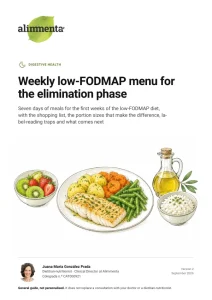
Your menu for the FODMAP elimination phase
- 7-day menu with the shopping list
- 8 low-FODMAP recipes
- The portions that make the difference and label traps
Where should we send it?
Free PDF, in your inbox in a moment.
Data controller: Alimmenta Tu Vida, S.L. Purpose: to send you the guide and, only if you tick the second box, tips by email on the topic. You can withdraw your consent and exercise your rights at [email protected]. Legal basis, recipients and retention periods are in our privacy policy.
When to see a doctor
What washing can and cannot do
Food choices and good kitchen hygiene reduce the risk of foodborne infection. They cannot diagnose or treat an infection; that is your doctor’s role.
Washing reduces risk, but it has limits:
- Running water and rubbing remove dirt from the surface.
- Disinfecting with suitable bleach reduces risk, but does not eliminate it.
- Washing does not remove microorganisms from inside sprouting seeds.
If you have symptoms that concern you, consult your doctor [7].
Most symptoms caused by something that was not washed properly are mild. Knowing when to seek advice is part of looking after yourself.

Tell us what your week looks like and what you would like to change
At the first visit we talk about your schedule, who cooks at home and what you have tried before. At the second visit you receive your plan in writing.
Keep reading

What not to eat during pregnancy (and what you can eat)
Since you found out you are pregnant, every meal can raise a question: ham, sushi, the cheese in…

Gut microbiota: what to eat to care for it
Bloating, heavy digestion and the question of whether you need probiotics or a stool test. Almost everything starts…
Sparkling water: is it as healthy as tap water?
You prefer it to plain water and it helps you drink more, but you have heard that it…
Digestive biscuits: what they contain and how to choose them
You choose them because they seem like the sensible option in the biscuit aisle, with their rustic look…
 Consultation
Digestive dietitian in Barcelona and online
Improving your symptoms starts with understanding your digestion
Book a visit → Consultation
Dietitian to help you eat better in Barcelona and online
Learn to eat better, with shopping, menus and cooking that fit your week and no lists of foods…
Book a visit →



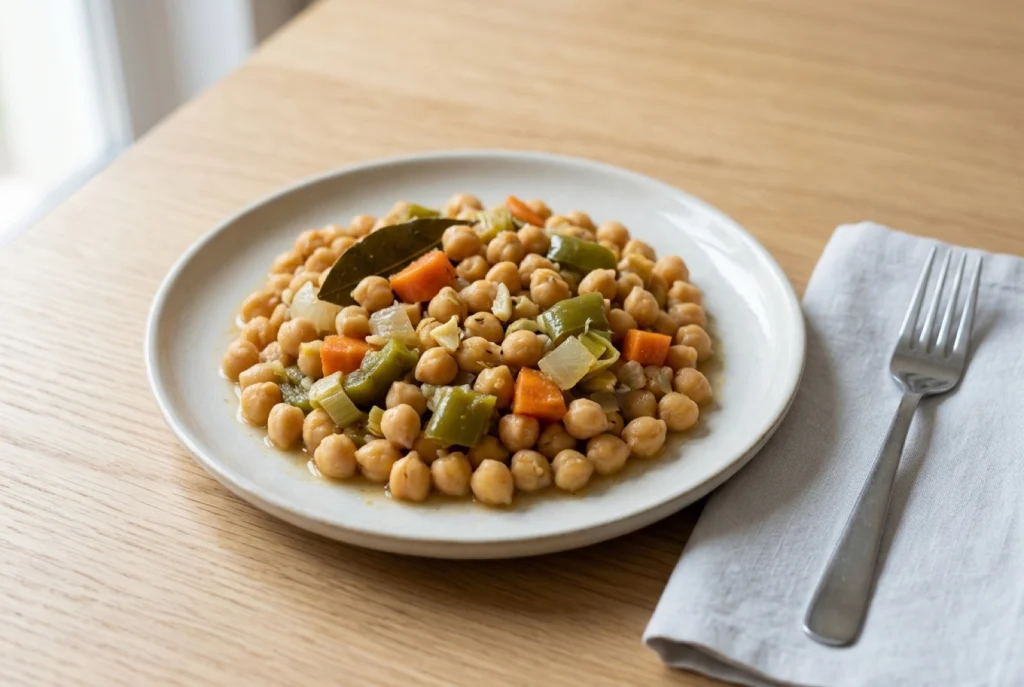
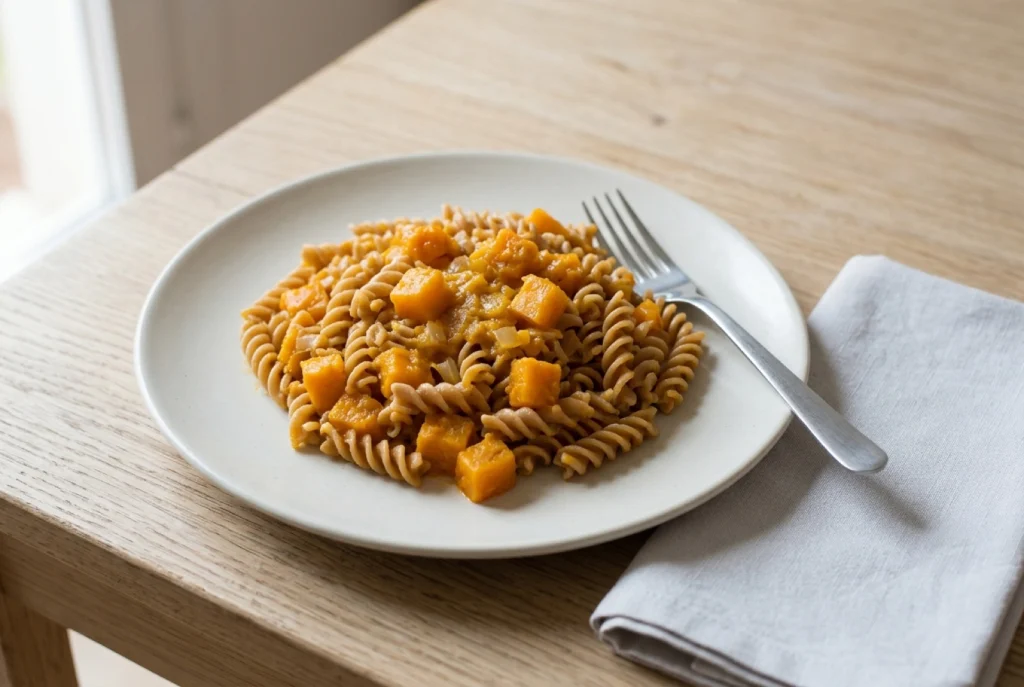
Recipes for this goal

Sources
- Spanish Agency for Food Safety and Nutrition (AESAN). Information for consumers: food safety recommendations (washing and disinfecting fruit and vegetables eaten raw). Madrid: AESAN; 2020.
- World Health Organization. Five keys to safer food manual. Geneva: WHO; 2006. https://www.who.int/publications/i/item/9789241594639
- FAO, WHO. Prevention and control of microbiological hazards in fresh fruits and vegetables. Parts 1 & 2: general principles. Meeting report. Microbiological Risk Assessment Series No. 42. Rome and Geneva: FAO/WHO; 2023. ISBN 978-92-4-008208-3. https://www.who.int/publications/i/item/9789240082083
- World Health Organization. Listeriosis. Fact sheet. 2018. https://www.who.int/news-room/fact-sheets/detail/listeriosis
- World Health Organization. E. coli. Fact sheet. 2018. https://www.who.int/news-room/fact-sheets/detail/e-coli
- FAO, WHO. Prevention and control of microbiological hazards in fresh fruits and vegetables. Part 3: sprouts. Meeting report. Microbiological Risk Assessment Series No. 43. Rome and Geneva: FAO/WHO; 2023. ISBN 978-92-4-006767-7. https://www.who.int/publications/i/item/9789240067677
- National Institute for Health and Care Excellence (NICE). Irritable bowel syndrome in adults: diagnosis and management (CG61). 2008, updated in 2017. https://www.nice.org.uk/guidance/cg61
Written and reviewed by


How we can help
Now, applied to you
Dietitian to help you eat better in Barcelona and onlineLearn to eat better, with shopping, menus and cooking that fit your week and no lists of foods you can't have, in Barcelona and online.
4.9 on Google · 5.0 on Doctoralia · 2,072 reviews
