
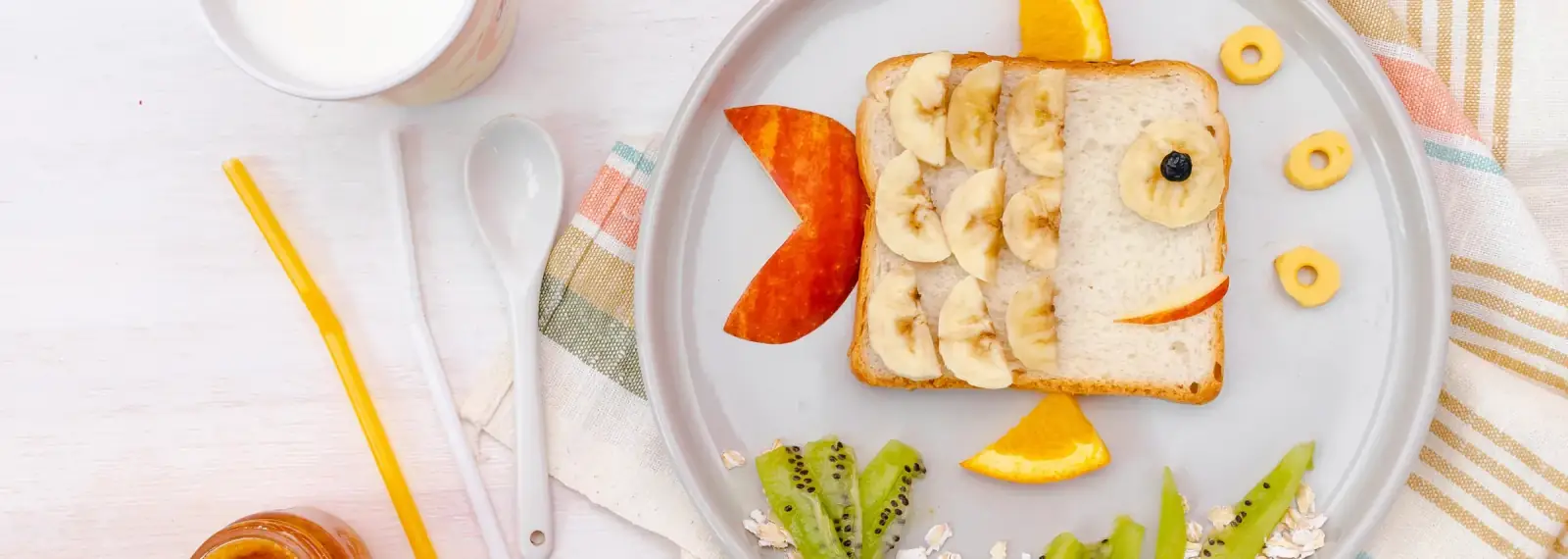
You can eat
- Plain dairy products: milk, plain unsweetened yoghurt, and fresh or mild cheese.
- Wholemeal bread: as toast or in a sandwich.
- Oats and cereal flakes with no added sugar: with milk or yoghurt.
- Whole fruit: strawberries, banana, kiwi, blueberries, apple or grapes, prepared in a way that is safe for their age.
- Egg: in a plain omelette, on its own or filled with vegetables, especially at the weekend.
- Healthy fats: extra virgin olive oil on toast, avocado or 100% peanut butter.
- Ground nuts or nut butter: on yoghurt or with milk.
- For flavour: cinnamon or unsweetened pure cocoa powder.
What to avoid
- Biscuits, pastries and muffins: save them for an occasional treat
- Sugary, filled or chocolate breakfast cereals.
- Sweetened cocoa powder
- Packaged juice, fruit drinks and sweetened milkshakes
- Flavoured yoghurts, dairy desserts and custard
- Whole nuts before age 5 because of the risk of choking.
- Fatty processed meats and pâtés: if serving a sandwich, choose mild cheese, cooked ham occasionally, egg or hummus.
Habits that help
- Set the breakfast table the night before: bowls, cereal flakes and washed fruit.
- If you are in a rush, prepare something to eat later.
- Have breakfast with your child whenever you can: children eat what they see others eat.
- Turn off screens during breakfast so they can notice their hunger and fullness.
- Let them choose between two healthy options: you decide what is offered; they decide how much to eat.
Who these breakfasts are for
They are designed for healthy children aged 3 to 12 who eat a varied diet. Almost all the ideas also work for the adults at home. See “My teenager skips breakfast”.
They are not suitable as they are if your child has an allergy to milk, eggs or nuts, coeliac disease or diabetes. Nor are they suitable if their paediatrician is monitoring their weight or growth. In these cases, breakfast should be adapted individually with help from their paediatrician. For children under 3, textures and amounts are different.
Seven breakfasts for the week
From Monday to Friday, breakfasts that take five minutes to prepare. Saturday and Sunday offer two options when you have a little more time. The quantities are a guide and can be adjusted to each day’s appetite. The mid-morning column is a quick suggestion; you can find the full ideas in healthy school snacks for children.
| Day | Breakfast | Ages 3 to 6 | Ages 7 to 12 | Mid-morning |
|---|---|---|---|---|
| Monday | Milk with cornflakes or oat flakes with no added sugar, strawberries and ground nuts | A small glass of milk · a fistful of flakes · 4 or 5 strawberries · a teaspoon of ground nuts | A large glass of milk · one and a half fistfuls of flakes · 6 to 8 strawberries · a tablespoon of ground nuts | A piece of fruit |
| Tuesday | Plain yoghurt with oat flakes, blueberries and ground nuts | One yoghurt · two tablespoons of oats · a small handful of blueberries | One or two yoghurts · three or four tablespoons of oats · a handful of blueberries | Small mild cheese sandwich |
| Wednesday | Wholemeal toast with 100% peanut butter and banana, with a glass of milk for dipping the toast fingers | One slice the size of their palm · a thin layer of spread · half a banana · a small glass of milk | Two slices · one banana · a large glass of milk | A plain yoghurt |
| Thursday | Wholemeal bread sandwich with mild cheese, cooked ham and tomato, and grapes | A bread roll the size of their palm · a small handful of grapes cut lengthways | A bread roll one and a half palms in size · a handful of grapes | A piece of fruit |
| Friday | Plain yoghurt with homemade unsweetened apple compote and cinnamon, and toast with tomato and olive oil | One yoghurt · two tablespoons of compote · one slice | One or two yoghurts · three or four tablespoons of compote · two slices | Wholemeal breadsticks and fruit |
| Saturday | Wholemeal toast with avocado and kiwi, and a glass of milk | One slice · a quarter of an avocado · half a yellow kiwi · a small glass of milk | Two slices · half an avocado · one kiwi · a large glass of milk | Yoghurt with ground nuts |
| Sunday | Plain omelette filled with cheese, mushrooms or spinach on wholemeal toast, with fruit and milk | One egg · one slice · a piece of fruit the size of their fist · a small glass of milk | One or two eggs · two slices · a piece of fruit · a large glass of milk | A piece of fruit |
If there is no fruit at breakfast one day, serve it mid-morning or for dessert. What matters is the overall pattern across the day.
How much should a child eat for breakfast at each age?
The most practical approach is to measure using the child’s own hand, which grows with them. This lets you adjust the portion as they get older.
- Grains. Bread the size of their palm, or as many flakes or oats as fit in their fist.
- Fruit. One piece the size of their fist, or what fits in their open hand if serving berries or grapes.
- Dairy. A glass or a yoghurt; for ages 3 to 6, a small glass is usually enough. Up to three servings throughout the day, preferably plain and unsweetened.
- Fat. About the size of the tip of their thumb, as oil, peanut butter or avocado.
These are starting points. Some days children are very hungry and other days less so, and that is normal. They do not have to finish everything on their plate.
Weekly shopping list
Calculated for one child for seven days, including the mid-morning snack. If there are two or more children, multiply the quantities of fresh produce.
Fruit and vegetables
- 250 g strawberries and one punnet of blueberries
- 3 bananas, 3 apples for the compote and 2 kiwis (yellow ones to start with)
- One small bunch of grapes
- 4 or 5 pieces of seasonal fruit for the mid-morning snack
- 1 avocado, 2 tomatoes and a handful of mushrooms or spinach
Dairy and eggs
- 2 litres of whole milk
- 6 plain, unsweetened yoghurts
- One small wedge of mild cheese or a tub of fresh cheese
- 2 eggs
Bread and grains
- One loaf of wholemeal bread (slice and freeze) and 2 wholemeal rolls
- Oat flakes and a small packet of cornflakes with no added sugar
- Wholemeal breadsticks
Cooked meats
- 50 g top-quality cooked ham
Pantry
- 100% peanut butter (with no added sugar or oils)
- 100 g walnuts or almonds, raw or roasted without salt, to grind
- Extra virgin olive oil, cinnamon and unsweetened pure cocoa powder
Why this breakfast works
It brings together what a child needs to have energy until mid-morning. Dairy provides protein and calcium, while whole grains provide lasting energy and fibre that helps them feel full. Fruit adds vitamins and water. Healthy fats make the meal tastier and more filling. You do not need to include all four every day.

Is breakfast essential? A review of sixteen studies in children and adolescents found no appreciable change in weight when breakfast was skipped [1]. It did find that eating breakfast was associated with a better overall diet, with fewer sugary drinks and less added sugar [1]. At Alimmenta, we recommend that children eat breakfast at a time that works best for them, unless it makes them feel unwell or does not fit the family routine. Avoid forcing them. To see how breakfast fits with the other meals, look at the weekly meal plan for children aged 3 to 12.
What should I do if my child does not want breakfast?
This is one of the questions we hear most often in consultations, and it is rarely a health problem. Many children wake up without feeling hungry, especially if they had a late dinner or have to get up in a hurry. Forcing them usually makes things worse.
- Split breakfast in two. Offer a glass of milk or a yoghurt at home, then toast or fruit mid-morning.
- Review dinner and bedtime. A large, late dinner can reduce their appetite in the morning.
- Make it easy to eat. Offer fruit in small pieces, finger foods or something to drink if they do not want to chew.
- No rewards or punishments. Offer food, sit with them and take the plate away without comment if they do not want any more.
If they also eat little during the rest of the day or you notice a change in their eating habits, discuss it with their paediatrician.
Juice, biscuits and sweetened cocoa every day?
Better to have them occasionally. The World Health Organization recommends that free sugars make up no more than 10% of daily energy intake, and ideally no more than 5% [2]. This includes added sugar in biscuits, cereals and cocoa, as well as the sugar in fruit juice and honey [2].
Juice, even when freshly squeezed, loses the fruit’s fibre and is less filling. There are age-specific limits for juice. None before the first birthday. After that, no more than about 120 ml a day from ages 1 to 3, 120 to 180 ml from ages 4 to 6, and 240 ml from ages 7 to 18 [3]. For drinks, choose water or milk.
Biscuits are a problem when they are eaten out of habit, rather than when someone has one occasionally. Save them for a treat.
Sweetened cocoa is best reduced gradually. Mix it half and half with pure cocoa for a couple of weeks, then keep reducing the sweetened cocoa. The palate gets used to it, and cinnamon can add flavour.
What mistakes do we see in consultations?
Three things come up repeatedly when we review a family’s mornings in consultations.
- Trusting the packaging. Biscuits “with cereals”, cartoon-branded cereals or yoghurts “for children” are still sweet products for occasional treats. The ingredient list is what matters.
- Wanting a different breakfast every day. It is fine to repeat the same healthy breakfast all week. Variety helps prevent boredom.
- Leaving fruit until last. By then, they may no longer be hungry. Put it on the table from the start, cut into pieces they can pick up by hand.
If there are allergies, a rush or breakfast away from home
Do not offer whole nuts before age 5 [4]. Until then, serve them ground or as a spread. For children under 5, grapes should be peeled, deseeded and cut lengthways [4]. Whole grapes can be swallowed without chewing and block the airway.
If your child has a cow’s milk protein allergy, replace dairy with a calcium-fortified soy drink, following their paediatrician’s or allergist’s advice. Bear in mind that soy is also an allergen. If they have breakfast on the way or at school, Thursday’s sandwich and whole fruit travel best.
If most mornings include dairy, whole grains and fruit, with sweet foods saved for an occasional treat, breakfast is sorted. For the adults at home, see our method for creating healthy, balanced breakfasts.
If eating has become a battle or you have questions about portions, our paediatric dietitian service in Barcelona and online can help you find a routine. Every child is different, and their plan should be too.
Changes that help
Milk
Instead of cow's milk in the case of an allergy, use a calcium-fortified, unsweetened soy drink as advised by the paediatrician or allergist, because it is the plant-based drink most similar in protein content.
Cereal flakes
Instead of sugary breakfast cereals, choose oat or corn flakes with no added sugar and chopped fruit, because they keep the crunch and the fruit adds sweetness.
Juice
Instead of a glass of juice, serve pieces of whole fruit, because it retains its fibre and is more filling.
Cooked ham
Instead of cooked ham in a sandwich, choose a plain omelette, fresh cheese with tomato or hummus, so cooked ham remains an occasional option.
We explain it on video
Your first step this week
Yoghurt with mashed banana
Mash half a banana with a fork, mix it with plain yoghurt and sprinkle with cinnamon. It takes a minute to eat and needs no sugar.
When to see a doctor
These breakfasts are general guidance for healthy children aged 3 to 12. They are not an individualised plan and do not replace an assessment by paediatrics, who monitor growth and development. If your child has allergies, a chronic condition or weight monitoring, discuss it with their healthcare professional first.
If you notice this change in your child while following the meal plan, do not wait to see whether it passes:
- Their eating habits have changed suddenly: they skip meals, count calories, hide food or go to the bathroom as soon as they finish eating.
If their eating habits change suddenly, see a paediatrician this week and ask for a referral to child and adolescent mental health services.
Almost all children go through phases when they eat differently, and these usually resolve on their own. For a full week’s meals, see the weekly meal plan for children; for any other questions, ask their paediatrician.

Bring your questions about their meals to a first appointment with the family
At the first appointment, we talk about what your child eats and what concerns you, and you leave with the first recommendations. Bring the latest measurements from the paediatrician if you have them. The plan for the whole household comes a week later, in person or by video call.
Keep reading

Healthy school snacks for children: 7-day menu and shopping list
It is quarter to eight and you still need to pack something for break time. One shop can…
Weekly meal plan for children (ages 3–12): 7 days and a shopping list
Between school, after-school activities and meals your children refuse even to try, deciding what to serve each day…
Nutrition for children with ADHD: what helps and what does not
You have been told to cut out colourings, to try omega-3 and that sugar unsettles them. And since…
School meals: what the menu should include and what to serve for dinner at home
Your child eats at school five days a week, and the menu arrives on a sheet of paper.…
 All about
School-age nutrition guides
Guides to planning meals for children aged 4 to 11, inside and outside school.
 Consultation
Paediatric registered dietitian in Barcelona and online
The habits we learn in childhood stay with us for life
Book a visit →


Recipes for this goal


Sources
- Ricotti R, Caputo M, Monzani A, et al. Breakfast skipping, weight, cardiometabolic risk, and nutrition quality in children and adolescents: a systematic review of randomized controlled and intervention longitudinal trials. Nutrients. 2021;13(10):3331. doi:10.3390/nu13103331
- World Health Organization. Guideline: sugars intake for adults and children. Geneva: World Health Organization; 2015. https://iris.who.int/bitstream/handle/10665/149782/9789241549028_eng.pdf
- Heyman MB, Abrams SA; Section on Gastroenterology, Hepatology, and Nutrition; Committee on Nutrition. Fruit juice in infants, children, and adolescents: current recommendations. Pediatrics. 2017;139(6):e20170967. doi:10.1542/peds.2017-0967
- Sociedad Española de Otorrinolaringología y Cirugía de Cabeza y Cuello (SEORL-CCC). Alimentos a evitar por riesgo de atragantamiento en menores de cinco años. 2022. https://seorl.net/alimentos-a-evitar-por-riesgo-de-atragantamiento-en-menores-de-cinco-anos/
Written and reviewed by


How we can help
Now, applied to you
Paediatric registered dietitian in Barcelona and onlineThe habits we learn in childhood stay with us for life
4.9 on Google · 5.0 on Doctoralia · 2,072 reviews
