You can eat
- Meat and fish: chicken and turkey, white fish and egg as a lightly cooked plain omelette, poached or hard-boiled. Meat up to three servings a week, favouring white meat; red and processed meat as little as possible.
- Lean cold meats: cooked ham and turkey breast.
- Dairy: up to three servings a day, preferably plain and unsweetened; semi-skimmed milk, plain yoghurt and fresh cheese.
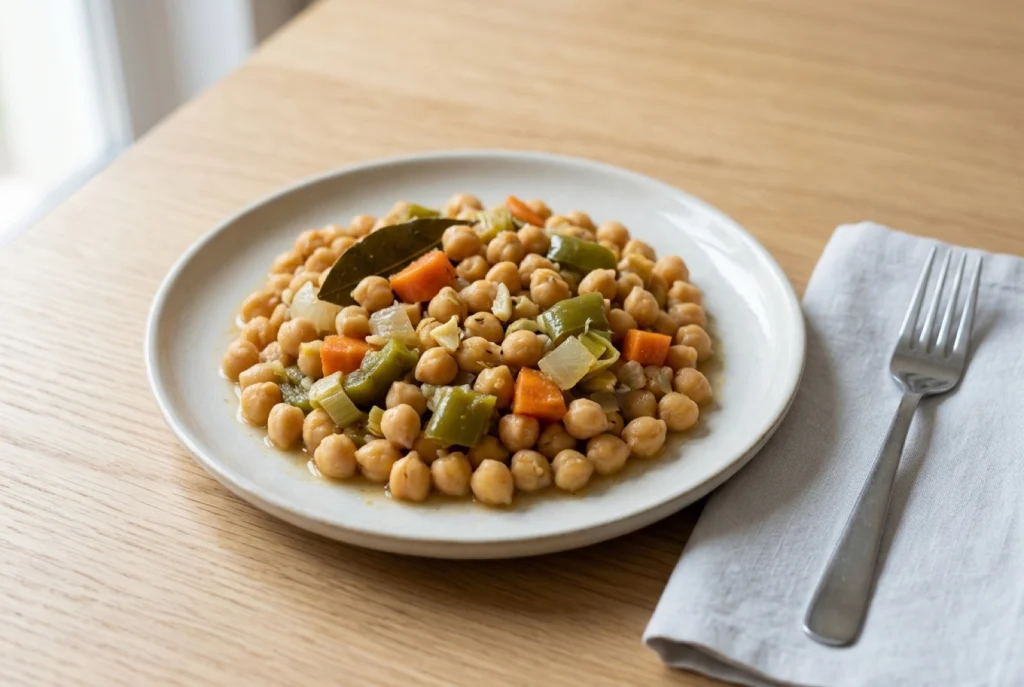
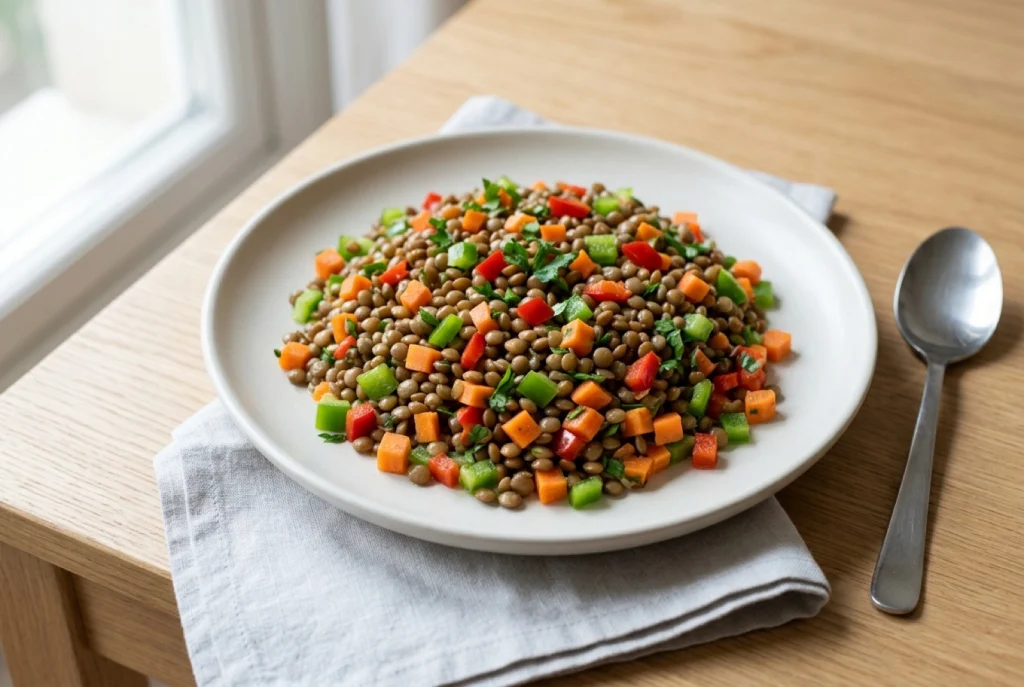
- Cereals, tubers and pulses: rice, pasta, bread and potato; pulses, puréed or passed through a food mill.
- Vegetables: cooked, baked or puréed.
- Fruit: ripe and peeled —banana, apple, pear— or stewed as compote.
- Fat: olive oil, for cooking and for dressing.
- Drinks: water and skimmed broths.
- Infusions: camomile, lemon balm or lemon verbena.
- Cooking methods: boiled, steamed, en papillote, oven-baked and microwaved.
What to avoid
- Fats: fried and battered food, heavily browned food from the griddle, fatty sauces, butter, cream, lard, ready meals and snacks.
- Red meat, such as veal and beef, and fatty cured meats: chorizo, salchichón, sobrasada and pâtés.
- Full-fat dairy: whole and condensed milk and mature cheeses.
- Acidic and spicy foods: tomato, citrus fruit, pineapple, unripe fruit, vinegar, pickles, pepper, paprika, chilli and hot sauces.
- Sweets: chocolate, cocoa, pastries and cakes.
- Alcohol and fizzy drinks, without first testing your tolerance.
- Coffee: avoid it. Tea: test your tolerance and give it up if it brings on heartburn.
- Mint and anything mentholated, sweets and chewing gum included.
- Raw and gas-forming foods: raw garlic and onion (sweated, yes), peppers, cauliflower and cabbages.
- Extreme temperatures: nothing very cold and nothing very hot.
Changes that help
Fats and fried food
Instead of frying or coating food in batter, steam it, bake it or cook it en papillote with olive oil, because fat slows stomach emptying.
Dairy
Instead of whole milk, have semi-skimmed milk or a soya drink, because fat is usually what causes trouble. Be aware that soya is an allergen.
Acidic foods at dinner
Instead of having tomato, citrus fruit or vinegar at dinner, have them at midday, because dinner is the meal you notice most when you lie down.
Desserts
Instead of chocolate or pastries for dessert, have ripe fruit or plain yoghurt, because chocolate lowers the pressure of the valve [1].
Habits that help
- Have dinner at least two or three hours before going to bed [1], and do not lie down after eating, not even on the sofa.
- Raise the head of the bed by about 10 centimetres if you have symptoms at night, with blocks under the legs or a wedge under the mattress.
- If you smoke, give it up; it counts for reflux too [1].
- Wear loose clothing, especially after eating.
- Move every day, but not right after eating.
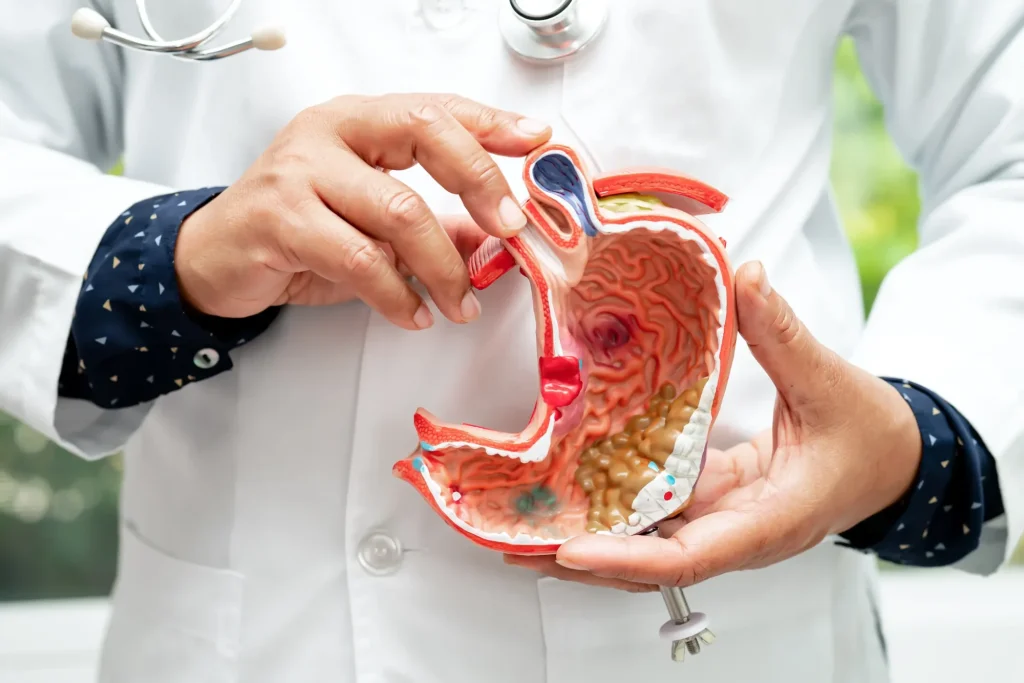
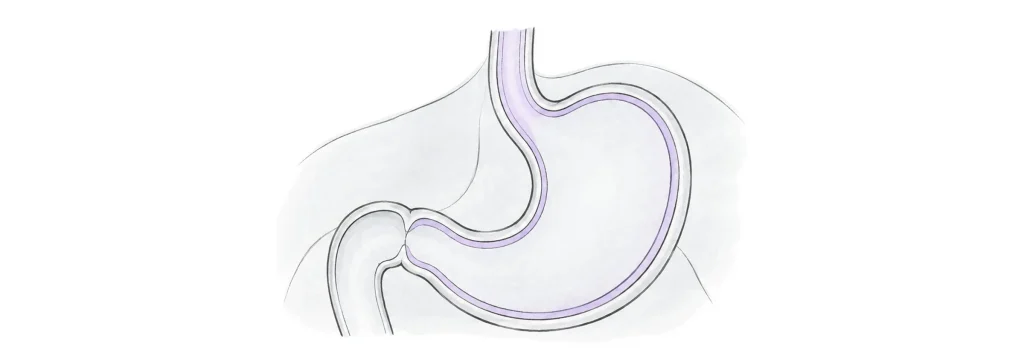
Gastro-oesophageal reflux happens when the contents of the stomach flow back towards the oesophagus. Between the two there is a valve, the lower oesophageal sphincter, which closes when you finish swallowing. When it opens at the wrong time, stomach acid rises into a tube that is not built to withstand it. Hence the burning behind the breastbone, the regurgitation, the sour or bitter taste in the mouth, the dry cough or the loss of voice in the morning.
It is very common. An analysis of studies from around the world estimates that 13.98% of the population has it, with a big difference between countries [3]. In consultations it usually comes after months of antacids and of removing foods without any order, with the burning just the same as on the first day.
Why do I have reflux?
Because something makes that valve fail to close properly or makes the stomach push upwards. It is almost never one single thing. Usually several add up, such as excess weight, smoking, alcohol, large or very fatty meals, eating in a rush and lying down soon afterwards. There is no safe amount of alcohol for health (OMS): the less, the better; and none during pregnancy, breastfeeding, childhood, if you are going to drive or if your medication does not allow it. See “Heartburn in pregnancy”.
Pregnancy also raises the pressure inside the abdomen and causes reflux without anything being broken. And there is hiatus hernia, when part of the stomach moves up into the chest through the diaphragm. It makes reflux more likely, but it is neither its only cause nor does everyone with a hernia have it.
Can reflux be cured?
Diet cannot cure reflux, but it can control it. Changes to your diet and habits reduce the symptoms and keep you away from what sets them off, and for many people that is enough. When medication is needed, your doctor manages the medication.
Before thinking any further about food, it is worth reviewing what you take. The British clinical guidelines advise going over the drugs that may be behind these symptoms, such as calcium antagonists, nitrates, theophyllines, bisphosphonates, corticosteroids and anti-inflammatories [4]. That does not mean stopping any of them on your own. You take the list to your doctor and ask.
What relieves reflux?
The measures do not all carry the same weight. The American College of Gastroenterology reflux guideline gives a strong recommendation to only one, losing weight if you are overweight or obese [1]. If that is you, the weight-loss diet is a good starting point. If it is not, the other measures are still useful to you.
The others come with a weaker recommendation and low-quality evidence [1]. They are having dinner at least two or three hours before going to bed, stopping smoking, raising the head of the bed if you have night-time symptoms and avoiding the foods that trigger your symptoms. That is why they are tried out and adjusted to each person.
Food is the same. An analysis of twenty-one studies concluded that the evidence for managing reflux with diet is limited. It also concluded that the plan has to be individual and maintained over time, removing or adding foods as the case requires [2].
Movement counts too. Active people have less reflux, and the risk falls clearly from around 150 minutes of activity a week [5]. Better away from meals and without exercises that bring on burning.
Which foods make reflux worse?
There are two groups, and they do not work the same way. Alcohol, tobacco, chocolate, mint and fatty food lower the pressure of the valve, at least in laboratory measurements [1]. Coffee, citrus fruit and spicy food barely move it, although for some people they cause trouble by another route [1]. Even so, few studies show that removing those in the first group improves symptoms [1].
There is no universal list. The British guidelines advise avoiding the foods you notice trigger your symptoms [4]. In clinic this is how we do it. The suspected foods are removed for one or two weeks, tried again one at a time, and only the ones that trigger your symptoms stay out. Removing them all just in case makes the diet less varied and does not improve heartburn. Do not restrict your diet more than necessary.
Do I have to give up coffee?
If you notice heartburn when you drink it, give it up; if not, there is no need to stop drinking it. An analysis of forty studies found slightly more reflux among those who drink coffee, 34.9% versus 30.7% [6]. It is a small difference and the authors themselves ask for more studies to clarify that association [6].

With tea, test your tolerance: if it brings on heartburn, give it up. That analysis deliberately left out the studies that mixed coffee with other drinks, tea among them [6].
How to spread out meals and dinner
In smaller portions and without rushing. We suggest four or five moderate meals, eating slowly and chewing well. Include breakfast at whatever time you can, unless it triggers your symptoms or does not fit your lifestyle. With less volume each time, the stomach puts less pressure on the junction with the oesophagus.
Dinner is the meal you notice most, because afterwards you lie down. Keep it small, because a large dinner keeps the stomach full for hours. And do not drink much right before getting into bed.
If you also have gastritis or hiatus hernia
They look alike and get confused, but it is worth knowing which is which. If what burns is the pit of the stomach, below the breastbone, and not the chest, see the gastritis diet. The advice overlaps quite a lot, but the cause and what the doctor does about it change.
If a hiatus hernia has already been found, this advice works for you just the same, because the symptoms are produced by reflux. And if you notice more bloating and wind than burning, start with the bloated tummy and abdominal distension.
What mistakes do we see in consultations?
- Having dinner late and trusting that a small dinner makes up for it. A light dinner helps, but it does not replace waiting before going to bed.
- Living on boiled rice and chicken breast for months. The diet becomes poor, the burning carries on and there is no longer any way to know which foods trigger your symptoms.
- Putting two pillows in place of raising the head of the bed. They bend the neck and do not raise the chest.
- Drinking a lot during the meal. The stomach fills up more than it should.
- Stopping your heartburn medication as soon as you feel better, without telling anyone. Your doctor manages that medication plan.
- Sticking to the food list and forgetting timings, the head of the bed and weight, which have as much backing or more [1].
If you do all this and the heartburn continues
It can happen, and it does not mean you are doing it wrong. Some reflux responds very well to changes in habits and some also needs medication or a test to clarify what is going on. That part is decided by your doctor.
If you have spent weeks having dinner early, sleeping with the head of the bed raised and looking after what you eat, and you still have burning almost every day, review it with your doctor. Ask whether any medicine you take may be behind it [4], whether any test is appropriate and whether your heartburn medication is appropriately adjusted.
Alongside that, your diet is adjusted case by case. The same dinner at half past ten at night does not affect you in the same way as at eight, and with night shifts or in pregnancy the plan changes quite a bit. We work on that with you in the digestive dietitian consultation.
We explain it on video
Your first step this week
Note when you get heartburn
For seven days, note what time you have dinner, what time you go to bed and whether you have heartburn at night. At the end of the week, you will see how it relates to your schedule and what you eat.
Your week of gentle meals for your stomach
- 7-day menu with gentle, spread-out meals
- 8 recipes and the shopping list
- What tends to cause trouble and when to see a doctor
Where should we send it?
Free PDF, in your inbox in a moment.
Data controller: Alimmenta Tu Vida, S.L. Purpose: to send you the guide and, only if you tick the second box, tips by email on the topic. You can withdraw your consent and exercise your rights at [email protected]. Legal basis, recipients and retention periods are in our privacy policy.
When to see a doctor
When you need to see a doctor
With food and habits we help ease the symptoms of reflux and keep you away from what sets them off. What we can’t do is work out what lies behind the burning, request an endoscopy or adjust medication: your doctor does that, with whichever test is appropriate.
Book a medical appointment without waiting to change your diet if you notice any of these signs:
- You vomit blood, or vomit something dark like coffee grounds [7].
- Your stools are black like tar, or have blood in them [7].
- You find it hard to swallow, it hurts to swallow or you feel that food is getting stuck [7].
- You lose weight without meaning to, with stomach pain or vomiting that keeps coming back [1].
- You notice paleness and more tiredness than usual, for no reason [7].
- The pain wakes you up at night, or doesn’t settle within two weeks even though you are on treatment [4].
If you vomit blood, pass black stools or the pain comes on suddenly and is severe, go to the emergency department today. If you find it hard to swallow, lose weight without meaning to or notice paleness and more tiredness than usual for no reason, make an appointment with your GP this week [7]. If the pain wakes you at night or does not settle within two weeks, talk to your doctor this week.
Most people with reflux never get this far. Knowing when to seek help is part of looking after yourself.

Tell us what disagrees with you and when
At the first visit we talk about your symptoms, your diagnosis if you have one, and what your lunches and dinners are like. A week later you have your plan in writing.
Keep reading

Hiatus hernia diet: what to eat and how to have dinner
If every dinner ends in heartburn and broken nights, you are not doing it wrong. With a hiatus…
Gastritis diet: what to eat and what to avoid
Before every meal you wonder how you are going to feel afterwards, and you end up eating fewer…

Low residue and low fibre diets: when they are used
You have been told to follow a low residue diet and wonder whether you must avoid all fruit…

Diarrhoea: what to eat, what to avoid and when to see a doctor
You have had loose stools for several days and wonder whether you should eat only rice or stop…
Bland diet: what to eat, how long, when to eat normally
Your stomach has been unsettled for hours, and you are wondering whether to have only broth, make some…
- Consultation
Digestive dietitian in Barcelona and online
Improving your symptoms starts with understanding your digestion
Book a visit → - All about
Crohn’s, colitis and other digestive diseases
Find a guide for your situation and ask your medical team which changes to your diet are right…
- Consultation
Dietitian for gastritis and reflux in Barcelona and online
Heartburn, acidity and dread at every meal. We help you eat with fewer symptoms if you have gastritis,…
Book a visit →





Recipes for this goal
Sources
- Katz PO, Dunbar KB, Schnoll-Sussman FH, et al. ACG Clinical Guideline: Guidelines for the Diagnosis and Management of Gastroesophageal Reflux Disease. Am J Gastroenterol. 2022;117(1):27-56. doi:10.14309/ajg.0000000000001538
- Martin Z, Spry G, Hoult J, et al. What is the efficacy of dietary, nutraceutical, and probiotic interventions for the management of gastroesophageal reflux disease symptoms? A systematic literature review and meta-analysis. Clin Nutr ESPEN. 2022;52:340-352. doi:10.1016/j.clnesp.2022.09.015
- Nirwan JS, Hasan SS, Babar ZU, et al. Global Prevalence and Risk Factors of Gastro-oesophageal Reflux Disease (GORD): Systematic Review with Meta-analysis. Sci Rep. 2020;10(1):5814. doi:10.1038/s41598-020-62795-1
- National Institute for Health and Care Excellence. Gastro-oesophageal reflux disease and dyspepsia in adults: investigation and management (CG184). NICE; 2014, actualizada en 2019. https://www.nice.org.uk/guidance/cg184
- Yu C, Wang T, Gao Y, et al. Association between physical activity and risk of gastroesophageal reflux disease: a systematic review and meta-analysis. J Sport Health Sci. 2024;13(5):687-698. doi:10.1016/j.jshs.2024.03.007
- Muftah M, McCarty TR, Hartnett D, et al. Association of Coffee Intake With Risk of Gastroesophageal Reflux Disease and Complications: A Systematic Review and Meta-Analysis. Clin Transl Gastroenterol. 2026;17(4):e00996. doi:10.14309/ctg.0000000000000996
- National Institute for Health and Care Excellence. Suspected cancer: recognition and referral (NG12). NICE; 2015, actualizada en 2026. https://www.nice.org.uk/guidance/ng12
Written and reviewed by


How we can help
Now, applied to you
Dietitian for gastritis and reflux in Barcelona and onlineHeartburn, acidity and dread at every meal. We help you eat with fewer symptoms if you have gastritis, reflux, hiatus hernia or Helicobacter, in Barcelona and online.
4.9 on Google · 5.0 on Doctoralia · 2,047 reviews